
3-Season vs. All-Season Sunroom: Which is Right for Your Texas Home?
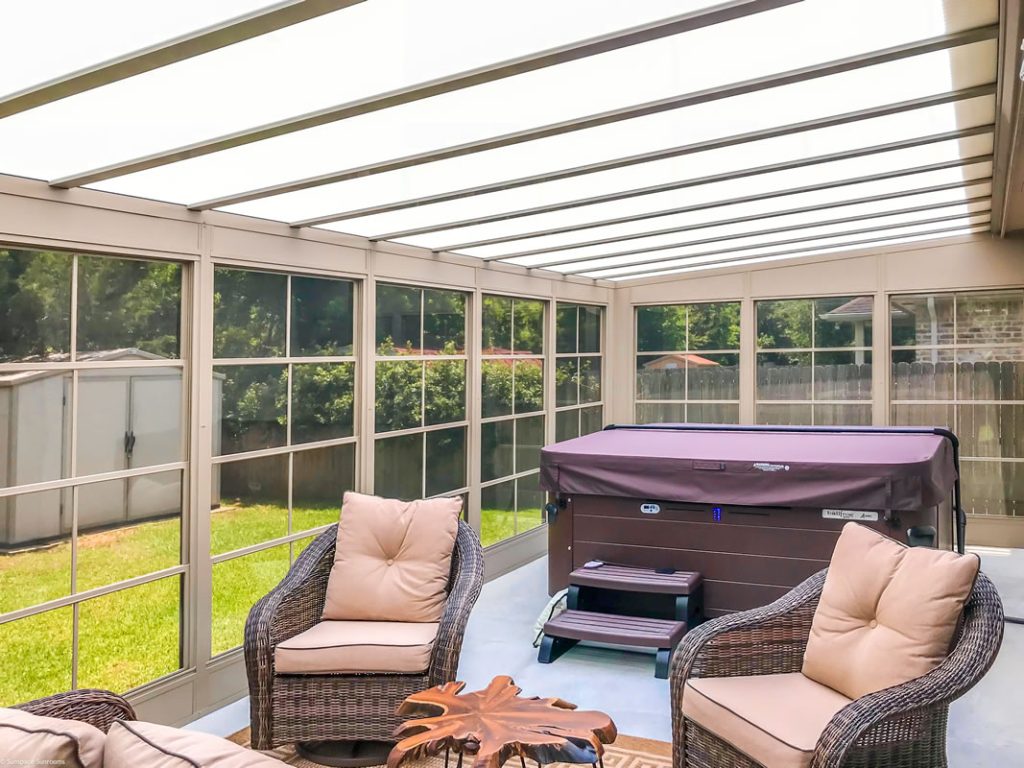
You’ve decided you want a sunroom. That’s the easy part. Now comes the question most homeowners get stuck on: Do you go with a 3-season room or an all-season room? Both sound appealing, and both will genuinely improve your home. But they’re built differently, they perform differently, and in a Texas climate, that difference matters more than it would almost anywhere else.
This guide breaks down everything you need to know. What separates these two options, what each one costs you in comfort and maintenance, and how to figure out which one actually fits your situation. If you’re already working with a sunroom contractor in Bryan College Station, bring this comparison with you. It’ll make the conversation a lot more productive.
Ready to talk through your specific home and budget? Contact the Sunspace Texas team for a free, no-pressure estimate.
Why Texas Makes This Decision More Important
In most parts of the country, a 3-season room is a perfectly reasonable choice. Spring, summer, and fall are all comfortable, and winters are mild enough that losing the room for a couple of months isn’t a big deal.
Texas is different. Here’s the reality of sunroom usability across the calendar:
- Summer (June through September): Without proper insulation and climate control, temperatures inside an uninsulated sunroom can get genuinely dangerous during peak afternoon heat. That’s four months of the year you’d essentially lose.
- Winter (December through February): Central Texas winters aren’t brutal by northern standards, but cold snaps can push temperatures low enough to make an uninsulated room uncomfortable, especially in the early mornings.
- Spring and Fall: These are the months a 3-season room truly shines, comfortable, breezy, and beautiful.
So for Texas homeowners, the honest math on a 3-season room is roughly five to six months of comfortable use per year. An all-season room changes that to twelve.
What Actually Separates These Two Options
The difference isn’t just about the name. The construction itself is fundamentally different.
3-Season Sunroom
A 3-season sunroom is built with single-glazed glass, a roof system, and aluminum framing. It’s designed to give you weather protection and outdoor views without full climate control. You get screens, you get covered, and you get a much better outdoor experience than a basic porch. But the room breathes with the outside temperature because it isn’t insulated to the same standard as your home.
Best suited for:
- Homeowners primarily use the space in spring and fall
- Those who want weather and pest protection without a full year-round room
- Budget-conscious projects where the goal is an improved porch experience
All-Season (4-Season) Sunroom
An all-season sunroom, like the Model 400 Insulated Sunroom, is built to a completely different standard. It features double-glazed windows with low-E argon gas between the panes, which slows heat transfer in both directions. That means it stays cooler in summer and warmer in winter without leaning hard on your home’s HVAC system. The result is a room that performs like a proper interior room which is livable, comfortable, and usable in every month of the year.
Best suited for:
- Homeowners who want to use the space year-round
- Home offices, playrooms, or any purpose that requires consistent comfort
- Those prioritizing resale value and maximum return on the investment
Side-by-Side Comparison
Here’s a quick reference to see how the two options stack up directly:
| Feature | 3-Season Sunroom | All-Season Sunroom |
| Comfortable months in Texas | ~5 to 6 | 12 |
| Window glazing | Single-glazed | Double-glazed, low-E argon |
| Insulation | Minimal | Full |
| Climate control | Not practical | Yes, HVAC-compatible |
| Installation cost | Lower | Higher |
| Resale value return | Moderate | Up to 51% of the cost |
| Maintenance complexity | Low | Low to moderate |
| Best use case | Casual outdoor enjoyment | Daily living space |
The All-Season Advantage in a Texas Climate
Beyond comfort, an all-season sunroom delivers a few benefits that matter specifically in this part of Texas.
Energy efficiency: Double-glazed, low-E windows reduce solar heat gain in summer and slow heat loss in winter. During the long Texas summer, this reduces the load on your home’s air conditioning system. Over time, that translates to real savings on your utility bill. Not a dramatic number month to month, but consistent and cumulative.
Year-round functionality: The room you invest in is actually available to you all twelve months. Whether it’s your morning coffee spot in February, a playroom in July, or a dinner party space in October, you’re not parking the room for months at a time.
Stronger resale value: Buyers respond to year-round usability. A well-built, insulated sunroom can retain around 51% of its installation cost at resale. A 3-season room adds value, too, but the return is lower because buyers discount rooms they can only use part of the year.
For a deeper look at how sunroom type affects your financial return, how to get the most ROI with your new sunroom, and walk through the specific decisions that move the needle.
Maintaining Each Type: What to Expect
Neither option is high-maintenance, but there are meaningful differences worth knowing before you commit.
3-Season Sunroom Maintenance
A 3-season room is simpler to maintain because there’s less to protect. The main tasks are:
- Cleaning screens and glass with water and mild detergent, and no harsh chemicals
- Inspecting the roof system for debris and drainage after storms
- Keeping gutters clear so water doesn’t pool on or around the room
All-Season Sunroom Maintenance
An all-season room has a few additional maintenance considerations because it’s built to tighter tolerances. The good news is that none of these tasks is difficult or time-consuming.
- Window cleaning: Use water and mild detergent with a soft cloth. The double-glazed windows with low-E coatings can be damaged by harsh chemicals, so avoid anything abrasive.
- Sealants and weatherstripping: Check caulk lines and weatherstripping once or twice a year, especially heading into winter. These seals are what keep the room airtight and comfortable. Repairing a small gap early is far easier than dealing with heat loss later.
- Patio door track: If your all-season room includes a sliding patio door, keep the track clear of dirt, debris, and leaves. A clogged track prevents the door from closing fully, which creates unnecessary air leakage and defeats the purpose of the insulation.
- Gutters and roof drainage: Same as the 3-season room that keeps gutters clear, so water flows away cleanly and doesn’t pool near the room’s structure.
The overall maintenance load for a well-built all-season sunroom is genuinely low. It’s not the kind of room that demands constant attention. The key is staying ahead of small issues like sealant wear before they become bigger ones.
How to Decide: Three Questions Worth Asking Yourself
Rather than just listing the pros and cons, here are the three questions that actually move the decision for most homeowners.
-
How many months a year do I realistically expect to use this room?
If you love spring and fall, entertain a few times a year outdoors, and don’t mind losing the space in summer and winter, a 3-season room might genuinely be enough. But if you’re picturing a home office, a kids’ playroom, or a room you’ll use daily regardless of the season, you need year-round performance. This means an all-season room.
-
What’s the specific purpose of the room?
Casual enjoyment a few months a year is a 3-season use case. A dedicated home office, a room where your kids play every afternoon, or a space you’ll entertain in across all seasons is an all-season use case. The clearer you are on the purpose, the easier this decision becomes.
-
Am I planning to sell this home in the next several years?
If yes, the resale angle matters. Buyers in Bryan-College Station will notice the difference between a room they can use year-round and one they’ll need to abandon during the summer. An all-season room is a more compelling feature and returns more of its cost at sale.
For homeowners who are still weighing the bigger decision of whether a sunroom makes financial sense at all, our guide on sunroom ROI in Texas covers the cost-versus-value question in detail.
A Note on Budget
Cost is real, and it’s okay to let it shape the decision. A 3-season room costs less to install than an all-season room, and if budget is the primary constraint, a 3-season room is still a meaningful improvement over an unenclosed porch or patio.
That said, it’s worth thinking through the full picture before defaulting to the lower number. If you install a 3-season room and find yourself frustrated by the six or seven months when it’s not comfortable to use, you haven’t actually gotten the value you were looking for. Sometimes spending a bit more upfront for the all-season version is the better financial decision over the life of the room.
Financing options can also change this math. Spreading the cost of an all-season room into manageable monthly payments often makes it far more accessible than the sticker price suggests. It’s worth asking about before you decide to settle.
Frequently Asked Questions
Can I upgrade a 3-season sunroom to an all-season one later?
In some cases, yes. If the structure was built with the right framing and materials, it may be possible to add insulation, upgrade the glazing, and improve climate control. However, it’s usually more cost-effective to build to the all-season standard from the start rather than retrofitting later. Ask your contractor about this during the planning phase.
Do all-season sunrooms require their own HVAC system?
Not necessarily. Many all-season sunrooms can be connected to your home’s existing HVAC system if it has the capacity. In some cases, a mini-split unit is added specifically for the sunroom. Your contractor should assess your existing system and recommend the right approach.
Will a 3-season sunroom add value to my home in Texas?
Yes, but less than an all-season room. Buyers recognize the seasonal limitation, which is reflected in how they value the space. Both options add value, where the all-season room just adds more.
How do I keep an all-season sunroom cool in the Texas summer?
The double-glazed, low-E windows do significant work on their own by reducing solar heat gain. Connecting the room to your home’s climate control handles the rest. Some homeowners also add window treatments for the hottest afternoons, which helps maintain comfort without overworking the HVAC.
Is a 3-season sunroom comfortable in a mild Texas winter?
During warmer winter days, yes. During cold snaps, it’ll feel much like being outdoors. If your winters are mild and you’re fine with the room being less usable on the coldest days, that may be acceptable. If you want consistent comfort across all winter conditions, the all-season room is the better fit.
What’s the typical lifespan of each type?
Both are built with durable aluminum framing that’s low-maintenance and long-lasting. The difference is primarily in the glass and sealing components. A well-maintained all-season sunroom, with its double-glazed windows and quality sealants, should give you decades of reliable performance when properly cared for.
At Sunspace Texas, we’ve been helping Bryan-College Station homeowners choose and install the right sunroom for their home and their life for over a decade. If you’re weighing the 3-season vs. all-season decision and want an honest conversation about what makes sense for your specific situation, contact us today to schedule your free estimate.