
Climate Control for Sunrooms: Systems, Costs, and What Works in Texas
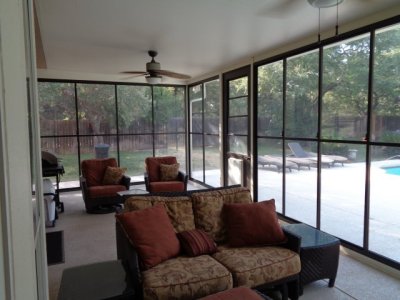
A sunroom without climate control is a seasonal space. In Bryan-College Station, that means it’s comfortable in March, October, and maybe November, and largely unusable from June through September, plus on the coldest winter days. If you want to get twelve months of real use out of your sunroom or porch enclosure, you need an active system that can heat and cool the space on demand.
The good news is that there are options at every budget level, from simple plug-in solutions to full HVAC integration. The right choice depends on your sunroom type, how you use the space, and how much year-round comfort you actually need. This guide covers all of them honestly.
For a free in-home conversation about which system makes sense for your specific room, the team at Sunspace Texas can walk you through the options during a no-obligation consultation.
First: Match Your Climate Control Approach to Your Sunroom Type
Not every system works for every sunroom. Before spending anything on climate control, identify which type of space you have, because this determines what’s actually possible.
| Sunroom Type | Climate Control Potential | Best Approach |
| Screen room(opens in new tab) | Limited: open to air by design | Ceiling fan only; portable heater for cool days |
| WeatherMaster porch enclosure(opens in new tab) (3-season) | Moderate: panels close but not airtight | Ceiling fan + portable AC or heater as needed |
| 3-season sunroom (single-glazed glass) | Moderate: better seal than vinyl, still not insulated | Portable or window AC unit; space heater in winter |
| All-season sunroom(opens in new tab) (Model 400, insulated) | Full: designed to retain conditioned air | Mini-split or HVAC extension; true year-round use |
If you have a screen room or WeatherMaster porch enclosure, you’re working with an inherently open system. Mechanical climate control will help at the margins, but it can’t replicate the performance of an insulated, sealed room. If year-round comfort is the goal, the most cost-effective long-term decision is upgrading to an all-season room rather than fighting the physics of an open one.
Option 1: Ceiling Fans: The Best Cost-to-Comfort Ratio
A ceiling fan is the single most cost-effective climate control upgrade for any sunroom. It doesn’t lower the actual air temperature, but it creates a wind-chill effect that makes you feel 4 to 8 degrees cooler, which is enough to extend comfortable hours significantly in spring, fall, and mild summer mornings.
What it costs: A quality ceiling fan with installation typically runs $150 to $400 depending on size and style. Running costs are minimal; a ceiling fan uses about the same electricity in a full day as a single hour of air conditioning.
How to use it correctly:
- Run counterclockwise in summer to push air directly downward, creating the cooling breeze effect
- Switch clockwise in winter on low speed to pull cool air up and redistribute warm air that pools near the ceiling
- Size matters: a room under 150 square feet works with a 42 to 48-inch fan; larger rooms need a 52-inch fan or two units
Limitation: A ceiling fan alone is not sufficient for a Texas sunroom in July or August, when outdoor temperatures routinely hit 100°F or above. It works best as a supplement to other cooling methods, or as a standalone solution in screen rooms and 3-season enclosures during milder months.
Option 2: Portable AC Units and Space Heaters: Low Upfront Cost, Higher Trade-offs
Portable and plug-in climate control equipment is the most accessible option. No installation required, no permits, no contractor. You plug it in, and it works.
Portable AC units pull room air through a cooling coil and vent hot exhaust air through a hose to the outside, typically through a window opening or a small wall penetration. They’re effective in smaller enclosed sunrooms, but come with real limitations in Texas heat.
What to know before buying:
- Match BTU output to your room size. A 150-square-foot room needs roughly 5,000 to 6,000 BTU. A 300-square-foot room needs 9,000 to 12,000 BTU. Undersizing is the most common mistake; an underpowered unit runs constantly and still can’t keep up.
- They work best in insulated, sealed rooms. In a 3-season room with single-pane glass and gaps around window frames, cooled air escapes faster than the unit can replace it.
- They’re loud. Most portable AC units operate at 52 to 58 decibels, noticeably louder than a conversation.
- Running costs are higher per BTU than a mini-split or central HVAC.
Portable space heaters are a genuinely good solution for winter use in 3-season rooms and porch enclosures. A 1,500-watt ceramic heater with a built-in thermostat heats a 150-square-foot room efficiently and cycles off when the target temperature is reached. Look for tip-over protection and auto-shutoff.
Best for: Homeowners who want basic seasonal comfort without any installation investment, or who are deciding whether to upgrade to a permanent system before committing.
Option 3: Extend Your Home’s Existing HVAC System
If your home has central air conditioning and heating, and your sunroom shares a wall with your home’s interior, extending the existing system into the sunroom is one of the most seamless permanent solutions. The sunroom gets a supply vent or two, a return air path, and is controlled through your existing thermostat.
What it costs: Duct extension runs vary widely based on the distance from your air handler, accessibility, and how many vents are needed. Expect $500 to $2,000 for a straightforward extension; more for complex routing.
When this works well:
- Your existing HVAC system has enough spare capacity to serve the added square footage. A contractor should perform a load calculation before you proceed; adding an unconditioned room to an already-maxed system just means neither space gets adequately cooled.
- The sunroom is an all-season insulated room that seals properly. You can’t effectively air-condition a space that has open gaps or non-insulated walls.
- The physical routing is practical. If the air handler is on the opposite side of the house with a slab foundation in between, duct routing may be prohibitively difficult.
When it doesn’t work:
- 3-season rooms and WeatherMaster porch enclosures with operable panels. When panels are open, conditioned air escapes immediately. You’d be cooling the neighborhood.
- Older HVAC systems are already running near capacity during summer peaks.
The advantage of this option is simplicity: one thermostat, one system, one utility bill. No separate equipment to maintain.
Option 4: A Dedicated Mini-Split System: The Best All-Around Solution for Texas Sunrooms
A ductless mini-split is the climate control system most recommended by sunroom contractors in Texas, and for good reason. It’s a two-part system: a compact indoor air handler mounts high on the wall, and a small outdoor condenser sits outside. No ductwork. No connection to your home’s existing system. No impact on your home’s HVAC capacity.
What it costs: A single-zone mini-split system typically runs $1,500 to $4,000 for equipment and installation, depending on BTU capacity and brand. Multi-zone systems that serve multiple rooms cost more.
Why mini-splits work so well for sunrooms:
- They’re sized specifically for the room, so they’re not undersized or oversized for the heat load
- They both heat and cool from one unit; the same system that keeps you comfortable in July handles the cold snaps Texas winters bring
- Modern inverter-driven mini-splits are among the most energy-efficient HVAC equipment available, typically 25 to 40% more efficient than portable units
- They’re quiet; indoor units operate at 19 to 28 decibels on low, quieter than normal conversation
- They run independently of your home’s system, so you only condition the sunroom when you’re using it
- They dehumidify as they cool, which matters in Central Texas where humidity is a real comfort factor through spring and fall
Sizing for a Texas sunroom: A typical 200-square-foot sunroom with east or north-facing glass needs roughly 6,000 to 9,000 BTU. The same size room facing south or west with heavy afternoon sun exposure may need 12,000 BTU or more. Your installer should perform a Manual J load calculation rather than guessing; Texas solar gain is significantly higher than national averages.
Best for: All-season insulated sunrooms where year-round comfort is the goal. This is the upgrade that turns a sunroom from a seasonal space into a room you use every day of the year.
Comparing All Four Options Side by Side
| System | Upfront Cost | Operating Cost | Comfort Level | Works in 3-Season? | Works in All-Season? |
| Ceiling fan | Low ($150–$400) | Very low | Moderate (not cooling) | Yes | Yes |
| Portable AC / heater | Low ($100–$600) | Moderate to high | Moderate | Partially | Yes |
| HVAC extension | Medium ($500–$2,000+) | Low (shared system) | High | No | Yes |
| Mini-split | Medium-high ($1,500–$4,000) | Low to moderate | Highest | No | Yes |
A Note on Insulation: The System Can Only Work as Well as the Room Allows
No climate control system, regardless of how powerful or efficient, can compensate for a room that isn’t built to hold conditioned air. If your all-season sunroom has failing caulk seals, degraded weatherstripping around door frames, or single-pane glass, address those first. Sealing gaps and replacing weatherstripping costs very little and immediately improves how effectively any system you install will perform.
For 3-season rooms where upgrading insulation isn’t practical, the honest answer is that portable solutions are the realistic ceiling. For homeowners who find themselves spending significantly on portable equipment every year, that cost often justifies moving up to an all-season build.
Our 3-season vs. all-season sunroom guide covers exactly what that upgrade involves, what it costs, and when it makes financial sense.
Frequently Asked Questions
What is the most cost-effective way to climate control a sunroom?
It depends on your sunroom type. For a screened or 3-season room, a ceiling fan combined with a portable AC unit during peak summer is the most affordable approach. For an all-season insulated sunroom, a ductless mini-split system has higher upfront cost but significantly lower operating costs and provides genuine year-round comfort that portable units can’t match.
Can I use my home’s HVAC system to heat and cool my sunroom?
Yes, if your system has spare capacity and the sunroom is an insulated, sealed room. A load calculation determines whether your existing equipment can handle the added square footage. This approach doesn’t work for 3-season rooms or porch enclosures with operable panels, since conditioned air escapes when panels are open.
What size mini-split do I need for a sunroom in Texas?
Sizing depends on the room’s square footage, ceiling height, glass area, and sun exposure. A south or west-facing sunroom with significant afternoon sun needs more cooling capacity than the same size room facing east or north. As a rough guide, plan for 30 to 60 BTU per square foot in Texas conditions, on the higher end for rooms with full afternoon sun. Have your installer perform a Manual J calculation rather than relying on a rule of thumb.
How do I climate control a porch enclosure or open-air sunroom?
A 3-season porch enclosure with WeatherMaster vinyl panels can be cooled with a ceiling fan and portable AC during summer, and a space heater during cool months. The system won’t perform like a sealed insulated room, but it extends comfortable use meaningfully beyond what an open porch offers. For year-round climate control in a truly sealed, conditioned space, an upgrade to an all-season insulated sunroom is the practical path.
Are there cost-effective upgrades to improve sunroom comfort without a full system installation?
Yes. Before investing in any mechanical system, check and seal gaps around window frames and door weatherstripping. Add interior solar shades on south and west-facing windows to reduce solar heat gain. Make sure your ceiling fan is correctly sized and running in the right direction for the season. These low-cost improvements reduce how hard any climate control system has to work and can meaningfully improve comfort on their own in milder conditions.
Ready to Figure Out the Right System for Your Sunroom?
The right climate control approach depends on what you have now and what you want your sunroom to become. Sunspace Texas has been building and advising on sunrooms in Bryan-College Station for over a decade. If you want a straight answer about which system fits your room, your budget, and your Texas climate, reach out for a free in-home consultation.